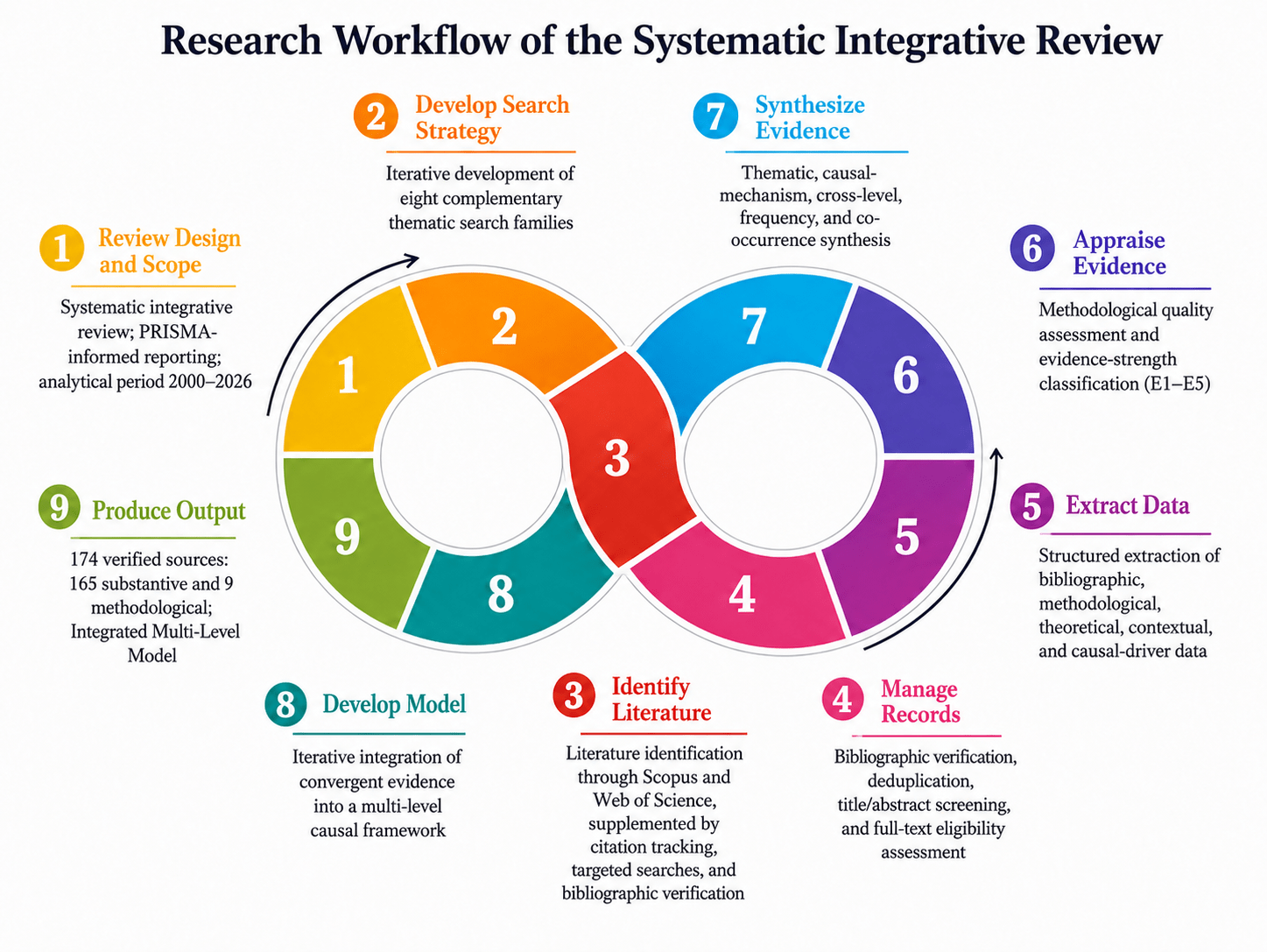
Disasters are often identified by the hazard that occurs immediately before them. However, hazard occurrence alone does not explain why similar events result in vastly different human, economic, institutional, and infrastructural impacts. This comprehensive review synthesizes evidence on the fundamental causes and drivers that transform hazards into disasters, emphasizing factors like structural vulnerability, inequality, governance, development trajectories, urbanization and land use, environmental degradation, climate-related hazard modification, preparedness and risk communication, critical-infrastructure interdependencies, and systemic and cascading risks. The study employed a systematic integrative review design with PRISMA-informed reporting and a multi-source literature search covering 2000-2026, while including essential earlier works. The final collection includes 174 sources: 165 contribute to the core synthesis, and nine support review methodology and reporting. Evidence was categorized by causal depth and strength, from theoretical ideas and qualitative mechanisms to observational data, longitudinal and comparative studies, stronger causal links, and mechanistic models. Findings show that disaster risk results from interacting pathways rather than single factors. Inequality and low human development lead to uneven losses; governance influences structural pressures through regulation, investment, services, coordination, and accountability; urban development that ignores risk increases exposure; climate change alters hazard conditions and heightens vulnerability; preparedness depends on efficacy, trust, communication, social capital, and resources; and infrastructure interdependencies can create secondary vulnerabilities far beyond exposed areas. The review introduces an Integrated Multi-Level Model of Disaster Causation and Risk Creation, structured along two axes: causal depth—ranging from root causes to immediate vulnerability—and propagation—from initial triggers through cascading, compound, and feedback mechanisms. It highlights potential intervention points—prospective, corrective, systemic, and transformative—and offers an evidence-based framework for disaster risk governance.
Underlying Causes and Drivers of Disasters: A Systematic Integrative Review of Structural Vulnerability, Risk Governance, Development Pathways, and Systemic Risk